Iron Tablets in Pregnancy: What Health Bodies Say, and What the Box Says
Pregnancy needs 27 mg of iron a day according to the Saudi MOH, and WHO recommends a daily iron and folic acid supplement. How to read iron on a label, and what the Ferro B box says.
In this article
- Why does pregnancy need more iron?
- What do official health bodies say about iron in pregnancy?
- Why the doctor, not the box, sets the dose
- How to read the iron amount on a label
- What the Ferro B box says
- If you also use Vita One
- Questions to take to your antenatal appointment
- For pharmacies and distributors
- Frequently asked questions
- Sources
“Iron tablets in pregnancy”, “when should I start iron?” and “which iron tablets don’t cause constipation?” are some of the most common pregnancy searches. The short answer: a pregnant woman needs more iron than before, and the World Health Organization recommends a daily iron and folic acid supplement as part of antenatal care, but the product, the amount and the start date are for the doctor to set after testing. This guide sets out what official health bodies say, explains how to read the iron amount on any label, and then, in a separate section, reproduces what is printed on the Ferro B box.
Why does pregnancy need more iron?
The body uses iron to make hemoglobin, the protein in red blood cells that carries oxygen, as the Saudi Ministry of Health explains on its iron deficiency anemia page. Needs rise in pregnancy: MedlinePlus, from the US National Library of Medicine, notes that pregnant and breastfeeding women need more iron and often cannot get enough from their normal diet.
In its anaemia fact sheet, WHO estimates that 37% of pregnant women aged 15 to 49 worldwide were anaemic in 2019, and describes iron deficiency as the most common nutritional deficiency leading to anaemia.
How much iron does the body need each day?
The Ministry of Health page includes a daily requirement table, including:
| Group | Daily iron requirement |
|---|---|
| Non-pregnant women (19 to 50) | 18 mg |
| Pregnant women (14 to 18, and 19 to 50) | 27 mg |
| Breastfeeding women (19 to 50) | 9 mg |
These figures are total intake from food and supplements combined, not a supplement dose. MedlinePlus gives the same numbers (18, 27 and 9 mg).
What do official health bodies say about iron in pregnancy?
Saudi Ministry of Health
In its healthy-pregnancy awareness campaign, the Ministry urged women planning a pregnancy to eat iron-rich foods to avoid anemia, and stressed taking folic acid tablets when planning a pregnancy until week 12. Its anemia page lists oral iron supplements, intravenous iron, and blood transfusion (for active bleeding or very low hemoglobin) as treatment options, so the approach differs from case to case and follows a diagnosis.
World Health Organization
In its e-Library of Evidence for Nutrition Actions (eLENA), WHO recommends daily oral iron and folic acid supplementation for pregnant women, with 30 mg to 60 mg of elemental iron and 400 mcg (0.4 mg) of folic acid. WHO links this to reducing the risk of maternal anaemia, low birth weight and preterm birth, and adds that folic acid should be started as early as possible, ideally before conception.
Side by side
| Source | On iron | On folic acid |
|---|---|---|
| Saudi Ministry of Health | 27 mg daily requirement in pregnancy; iron-rich foods when planning a pregnancy | Folic acid tablets when planning a pregnancy, until week 12 |
| WHO | Daily supplement of 30 to 60 mg elemental iron in pregnancy | 400 mcg a day, ideally started before conception |
For more on folic acid amounts and timing, read Folic Acid Before Pregnancy: What Does the Box Say?
Why the doctor, not the box, sets the dose
The WHO recommendation is a range (30 to 60 mg), and where a woman falls in it, or outside it, depends on her situation. There are practical reasons this is the doctor’s call:
- Blood tests: hemoglobin, usually measured as part of a complete blood count (CBC), and ferritin, the protein that stores iron, help the doctor see whether there is anemia or low iron stores (MedlinePlus).
- More is not better: MedlinePlus warns that taking more iron than your body needs can cause serious medical problems.
- Side effects: the NHS lists constipation or diarrhoea, tummy pain, heartburn, feeling sick and darker than usual stools as common side effects of iron tablets. A doctor can adjust the plan if they appear.
- Other products: some supplements also contain iron, so amounts add up.
So “which month of pregnancy should iron start?” is not something a label or an article can answer; your antenatal doctor answers it after examining you. For the factors that affect iron absorption and timing, read our article on the best time to take iron tablets.
How to read the iron amount on a label
Elemental iron versus compound weight
Iron in supplements comes as a compound (a salt), such as ferrous fumarate, ferrous sulfate or ferrous gluconate. Each compound contains a different share of actual iron, called “elemental iron”. WHO gives an example: 60 mg of elemental iron is equivalent to about:
| Compound | Amount equal to 60 mg elemental iron |
|---|---|
| Ferrous fumarate | 180 mg |
| Ferrous sulfate heptahydrate | 300 mg |
| Ferrous gluconate | 500 mg |
In practice: a large number printed next to a compound name is not the iron amount. So look at the figure in the nutrition facts table and at the compound named in the active ingredients list. If the label does not make clear that the figure is elemental iron, ask your doctor how to read it.
The percentage next to the amount
The percentage beside each nutrient compares the amount with a daily reference value used on the label. It is not your personal requirement and does not change in pregnancy, so it should not be read as “the right dose for pregnancy”.
mg and mcg
Iron is usually given in milligrams (mg), while folic acid and iodine are given in micrograms (mcg). One milligram is 1,000 micrograms, so check the unit before comparing.
What the Ferro B box says
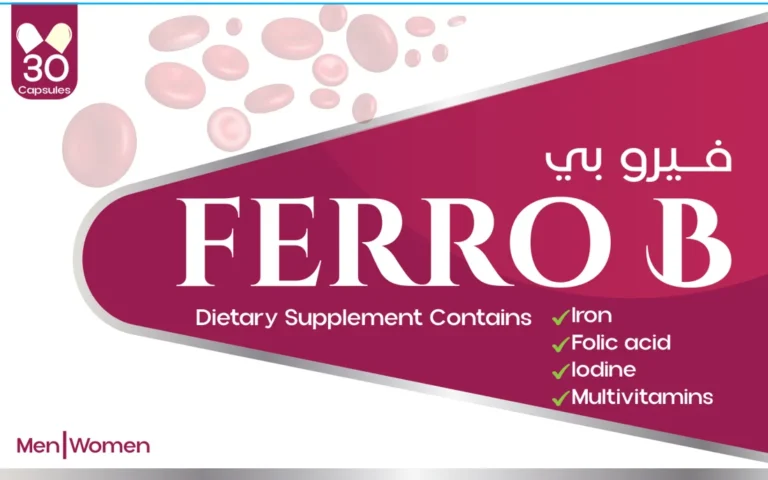
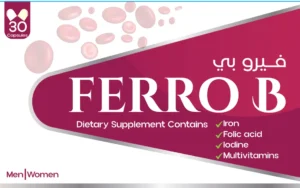
This section reproduces the box text and is separate from the health-authority guidance above. Ferro B is a dietary supplement containing iron, folic acid, iodine and multivitamins, in a box of 30 capsules. Directions: “For Adults: 1 Capsule daily or as recommended by a Physician.”
Nutrition facts (per capsule)
| Nutrient | Amount | % on the box |
|---|---|---|
| Iron | 30 mg | 136% |
| Folic acid | 400 mcg | 100% |
| Iodine | 100 mcg | 67% |
| Vitamin C | 100 mg | 100% |
| Vitamin B6 | 1 mg | 77% |
| Vitamin B12 | 1.75 mcg | 73% |
| Vitamin D3 | 5 mcg | 33% |
The active ingredients list gives the iron as “Iron (Ferrous Fumarate)”. In other words, the iron source is ferrous fumarate. The box does not say whether this figure is elemental iron or the weight of the compound.
On iron (box text)
On the box · Ferro B
Product page →“Contributes to the normal formation of red blood cells and hemoglobin.”
On folic acid (box text)
On the box · Ferro B
Product page →“Contributes to the growth of maternal tissues during pregnancy. Consuming Folic acid supplements increases Folic acid levels in pregnant women. Low Folic acid levels are a risk factor for neural tube defects in newborns.”
On iodine and vitamin C (box text)
- Iodine: “Contributes to the normal function of cognition (perception).”
- Vitamin C: “Helps reduce fatigue and exhaustion. Increases iron absorption.”
Box precautions
On the box · Ferro B
Product page →“If you are allergic to any ingredients in the product, stop using it immediately.”
“Consult your doctor before use.”
“Do not exceed the recommended daily dose.”
“To obtain the desired benefit, 400 micrograms of Folic acid supplement should be consumed daily for a month before the start of pregnancy and at least three months after.”
The box is labelled Men | Women, for adults, and says to use it after consulting a doctor, so in pregnancy it should only be started on the doctor’s advice.
If you also use Vita One
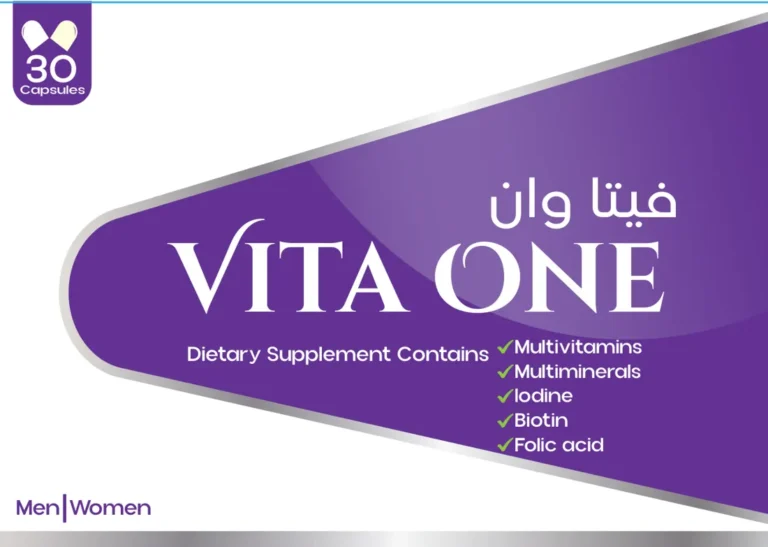
Vita One is a dietary supplement containing multivitamins, multiminerals, iodine, biotin and folic acid, with 10 mg iron (45% on the box panel) and 400 mcg folic acid per capsule. The Vita One box carries no pregnancy-related statement, so we only report the amounts. Because both products contain iron and folic acid, using them together means the amounts add up; do not combine them without your doctor reviewing the full list.
Questions to take to your antenatal appointment
- Do my blood tests (hemoglobin and ferritin) show I need an iron supplement?
- How much iron is right for me, when should I start, and for how long?
- Is one supplement combining iron and folic acid enough, or do I need a different plan?
- What should I do if I get constipation or stomach upset?
- Does the timing of iron clash with other supplements I take, such as calcium?
For the symptoms health bodies list for low iron, and the tests used, read our article on iron deficiency symptoms in women.
For pharmacies and distributors
Ferro B and Vita One are part of Dawaak’s four supplements made in Saudi Arabia. Pharmacies and distributors can order by the box or by the carton, with no minimum order and delivery to all regions of Saudi Arabia. When you ask, we contact you within 2 to 24 hours and send you a written quote. Visit For pharmacies and businesses or email info@dawaak.com.
Frequently asked questions
When should iron be started in pregnancy?
WHO recommends a daily iron and folic acid supplement during pregnancy. The start date and amount for each woman are set by her doctor, usually after blood tests; the official sources we reviewed do not name one month that suits everyone.
How much iron does a pregnant woman need per day?
27 mg a day according to the Saudi Ministry of Health table, counting food and supplements together. WHO recommends a supplement with 30 to 60 mg of elemental iron daily in pregnancy; your doctor sets the right amount for you.
Do iron tablets cause constipation in pregnancy?
The NHS and MedlinePlus list constipation or diarrhoea among the common side effects of iron tablets. If it happens, tell your doctor, who may adjust the amount or timing.
What is the difference between iron and ferrous fumarate on a label?
Ferrous fumarate is a compound that carries iron; elemental iron is only part of its weight. According to WHO, 180 mg of ferrous fumarate is equivalent to about 60 mg of elemental iron, so always compare the iron amount, not the compound weight.
Is Ferro B made for pregnancy?
The box is labelled Men | Women, for adults, with the directions “1 Capsule daily or as recommended by a Physician” and the precaution “Consult your doctor before use”. Whether to use it in pregnancy is your doctor’s decision.
Sources
Show the sources (11)
- Saudi Ministry of Health: Iron Deficiency Anemia
- Saudi Ministry of Health: MOH Continues Its Awareness Efforts for Healthy and Safe Pregnancy
- WHO eLENA: Daily iron and folic acid supplementation during pregnancy
- WHO: Anaemia fact sheet
- MedlinePlus: Iron in diet
- MedlinePlus: Iron deficiency anemia
- MedlinePlus: Taking iron supplements
- MedlinePlus: Ferritin Blood Test
- MedlinePlus: Hemoglobin Test
- NHS: Iron deficiency anaemia
- Box text and nutrition facts panels of Ferro B and Vita One.
Registration numbers: Ferro B FOP-120226-60009 · Vita One FOP-240226-74229.
Food supplements are not a substitute for a balanced diet and a healthy lifestyle. Use after consulting a doctor, and do not exceed the recommended daily dose.
Keep reading
More articles
 For pharmacies
How to Check a Supplement’s SFDA Registration: A Pharmacy Guide
How to look up any supplement in the SFDA's official list of registered food products, what the FOP numbers of the four…
 Ingredients
Vitamin D Deficiency: How Is It Tested and What Do Results Mean?
Deficiency cannot be judged from symptoms alone. The 25-hydroxyvitamin D test, reference levels from the US National Academies (IOM 2011) and MedlinePlus,…
 Ingredients
Folic Acid Before Pregnancy: What Does the Box Say?
How much folic acid, and when to start before pregnancy? Official guidance from the Saudi MOH and WHO, compared with the Ferro…