

Omega-3 Benefits: What Are EPA and DHA, and How Do You Read a Fish-Oil Label?
What EFSA and MedlinePlus say about EPA and DHA, and why 1000 mg on the front is not the omega-3 amount. A guide to reading fish-oil labels, with the OmeCare box quoted exactly.
In this article
Search for “omega-3 benefits” and you will find long lists, most of them without a source. This guide takes a shorter route. It explains what EPA and DHA are, then sets out what official bodies say, including the European Food Safety Authority (EFSA). It then shows you how to read a fish-oil capsule label, because the big number on the front, such as 1000 mg, is not the amount of EPA and DHA. Finally, it quotes exactly what is printed on the OmeCare box.
What is omega-3?
Omega-3 is the name of a group of fatty acids. MedlinePlus, from the US National Library of Medicine, describes omega-3 fatty acids as a type of polyunsaturated fat and notes that your body does not make them on its own, so they have to come from food or supplements.
The same MedlinePlus page names three types and where each is found:
- EPA (eicosapentaenoic acid): found in oily fish such as salmon, mackerel and sardines.
- DHA (docosahexaenoic acid): also found in oily fish.
- ALA (alpha-linolenic acid): comes from some oils, nuts and plants, such as ground flaxseed and flaxseed oil, walnuts, chia seeds, and canola and soy oils.
What is the difference between EPA and DHA?
Both are long-chain omega-3 fatty acids and both are found in fish oil. They differ in chemical structure and name. On a fish-oil label each has its own line with an amount in milligrams, which is why the OmeCare panel spells out both: “Eicosapentaenoic acid (EPA)” and “Docosahexaenoic acid (DHA)”.
What do official bodies say about omega-3 benefits?
This section covers what official scientific and health bodies say about EPA and DHA in general, not about any particular product.
European Food Safety Authority (EFSA)
In a press release dated 27 July 2012, EFSA summarised its scientific opinions on long-chain omega-3 fatty acids:
- Intakes of 250 mg a day of EPA and DHA are sufficient for the maintenance of normal cardiac function.
- 250 mg a day is an adequate intake for the maintenance of general cardiovascular health among healthy adults and children.
- Supplemental intakes of EPA and DHA combined at doses up to 5 g a day do not raise safety concerns for adults.
- Adults consume on average up to 400 to 500 mg a day of these fatty acids from food.
What about hair, skin and the rest?
Searches also include “omega-3 benefits for hair”, “for skin”, “in pregnancy” and more. We do not cover those topics here, and the OmeCare box does not list them among its benefits, so we do not attribute them to the product. If you have a question about a specific condition, ask your doctor.
How to read a fish-oil capsule label
The figure that confuses people most is “omega-3 1000”. In most cases it is the weight of fish oil in the capsule, not the amount of EPA and DHA. So read the panel step by step:
- Total oil: for example “Omega-3 Fish Oil 1000 mg”. This is the weight of all the oil.
- EPA and DHA lines: add them together to get the long-chain omega-3 per serving.
- Serving size: are the figures for one capsule or two? Check the serving line and the directions.
- Other ingredients: some capsules add vitamins such as D3 and E, and those amounts add up with any other supplement you use.
- Shell, flavour and allergens: the inactive ingredients tell you what the shell is made of and the flavour; the precautions tell you whether the product contains fish oil.
What the OmeCare box says
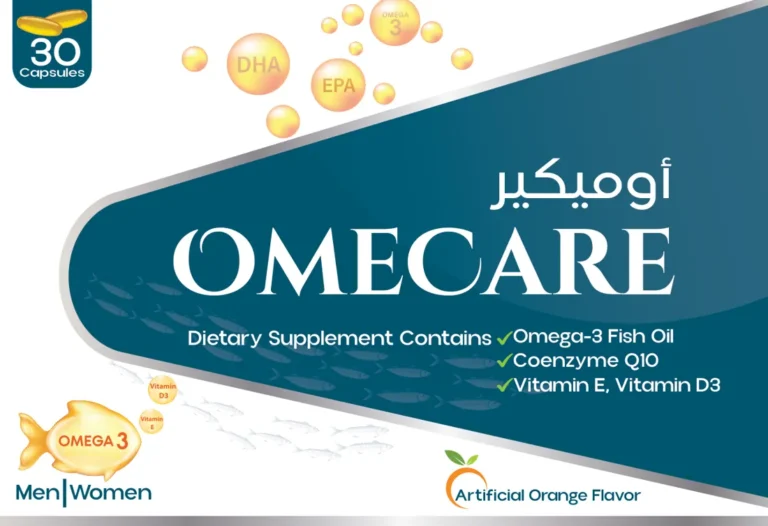
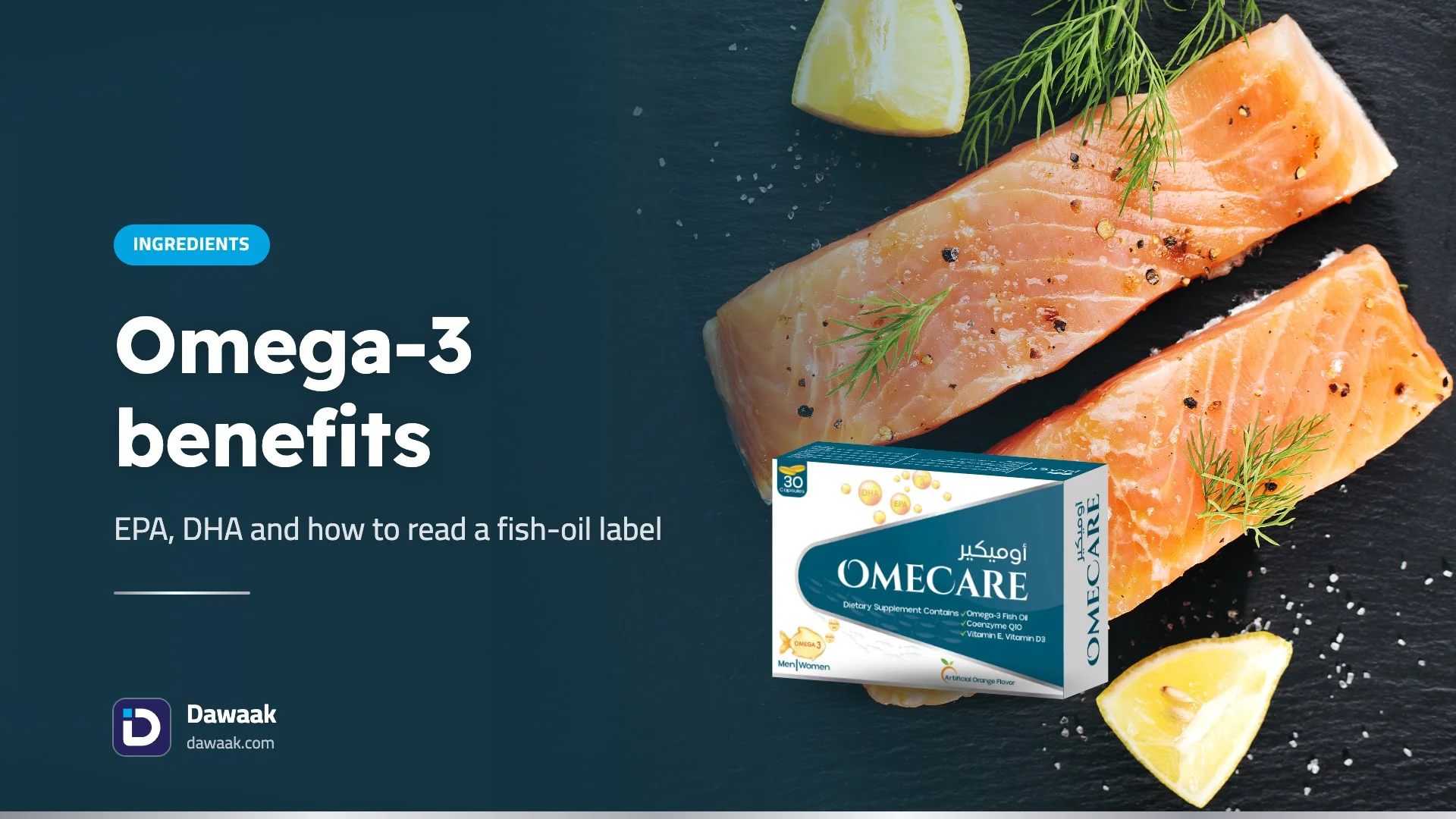
OmeCare is a dietary supplement containing omega-3 fish oil, coenzyme Q10, vitamin E and vitamin D3, with an artificial orange flavour. Each box holds 30 soft capsules, and the directions read: “For Adults: 1 Soft capsule daily or as recommended by a Physician.”
Nutrition facts (serving = 1 soft capsule)
| Ingredient | Per capsule | % on the box |
|---|---|---|
| Omega-3 Fish Oil | 1000 mg | ** |
| Eicosapentaenoic acid (EPA) | 350 mg | ** |
| Docosahexaenoic acid (DHA) | 200 mg | ** |
| Vitamin E (15 IU) | 6.75 mg | 75% |
| Vitamin D3 (400 IU) | 10 mcg | 67% |
Applying step two: 350 mg EPA + 200 mg DHA = 550 mg of EPA and DHA per capsule, out of 1000 mg of fish oil. The (**) is copied from the box panel, which gives no percentage for these lines.
What about coenzyme Q10?
The active ingredients list on the box includes “Coenzyme Q10 Powder 10%”. The nutrition panel has no separate line giving a Q10 amount, and the box carries no benefit statement for it, so we do not attribute any benefit to it here.
Benefits as printed on the box
On the box · OmeCare
Product page →EPA & DHA: “Contribute to maintaining the normal function of the heart.”
Vitamin E: “Contributes to protecting cells from oxidation.”
Vitamin D3: “Contributes to the normal function of the immune system. Contributes to maintaining normal blood calcium levels.”
Other ingredients and precautions
Inactive ingredients as printed: “Glycerol – E422 – Humectant, Artificial Orange Flavor, Bovine Gelatin (Capsule Shell).” In other words, the capsule shell is bovine gelatin and the flavour is artificial orange.
The box precautions include: “This product contains Fish Oil.”, “If you are allergic to any ingredients in the product, stop using it immediately.”, “Consult your doctor before use.” and “Do not exceed the recommended daily dose.”
Omega-3 from food
A supplement does not replace food. The NHS says a healthy, balanced diet should include at least 2 portions of fish a week, including 1 of oily fish, with a portion being around 140 g. Oily fish it lists include salmon, sardines, trout, mackerel and herring, and it notes that fresh and canned tuna do not count as oily fish. MedlinePlus also notes that certain fish are the best sources of omega-3s.
Using more than one supplement
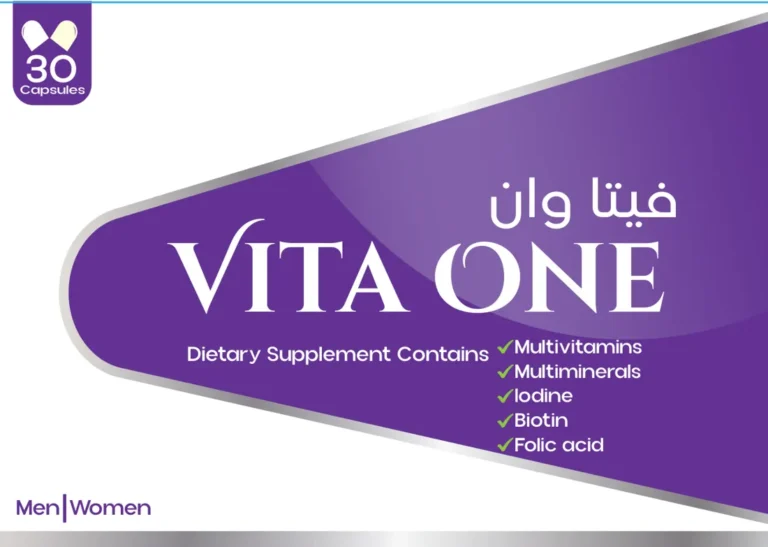
Each OmeCare capsule contains 10 mcg vitamin D3 and 6.75 mg vitamin E. If you also use another supplement with these vitamins, such as Vita One (10 mcg vitamin D3 and 10 mg vitamin E per capsule), the amounts add up. Vitamin D3 in particular is in all four Dawaak products; see our vitamin D3 article for the amounts and our vitamin D deficiency article for what test results mean.
Before you start, show your doctor a list of every supplement and medicine you take.
For pharmacies and distributors
OmeCare is made in Saudi Arabia: 30 soft capsules per box and 63 boxes per carton. We supply pharmacies and distributors by the box or by the carton with no minimum order, and deliver to every region of the Kingdom. When you ask, we contact you within 2 to 24 hours and send you a written quote. Request yours on the For pharmacies and businesses page or email info@dawaak.com.
Frequently asked questions
What does omega-3 1000 mg mean?
In most cases 1000 mg is the weight of fish oil in the capsule, not the amount of EPA and DHA. Read the EPA and DHA lines on the panel and add them up. OmeCare, for example, has 1000 mg fish oil including 350 mg EPA and 200 mg DHA.
How much omega-3 do I need a day?
EFSA states that 250 mg a day of EPA and DHA is sufficient for the maintenance of normal cardiac function. Your doctor can advise what suits you.
When should omega-3 be taken?
The OmeCare box does not specify a time. The directions are “For Adults: 1 Soft capsule daily or as recommended by a Physician”, and your doctor can advise on timing.
Does OmeCare contain vitamin D?
Yes. Each soft capsule has 10 mcg (400 IU) vitamin D3, plus 6.75 mg vitamin E, as shown on the box panel.
What is the OmeCare capsule shell made of?
Bovine gelatin, as listed in the box ingredients: “Bovine Gelatin (Capsule Shell)”. The flavour is artificial orange.
Sources
Show the sources (4)
- European Food Safety Authority (EFSA): EFSA assesses safety of long-chain omega-3 fatty acids (27 July 2012)
- MedlinePlus (US National Library of Medicine): Omega-3 fats
- NHS: Fish and shellfish
- OmeCare box text and nutrition facts panel; Vita One nutrition facts panel.
Registration numbers: OmeCare FOP-100226-55838 · Vita One FOP-240226-74229.
This article is general education and does not replace advice from your doctor. Food supplements are not a substitute for a balanced diet and a healthy lifestyle. Use after consulting a doctor, and do not exceed the recommended daily dose.
Keep reading
More articles
 For pharmacies
Choosing a Supplement Supplier: A Checklist for Pharmacies
Eight questions a pharmacy, chain or distributor should ask any supplement supplier before the first order, from registration numbers to quote speed,…
 Ingredients
Iron Tablets in Pregnancy: What Health Bodies Say, and What the Box Says
Pregnancy needs 27 mg of iron a day according to the Saudi MOH, and WHO recommends a daily iron and folic acid…
 For pharmacies
How to Check a Supplement’s SFDA Registration: A Pharmacy Guide
How to look up any supplement in the SFDA's official list of registered food products, what the FOP numbers of the four…